

Nipple Covers for Models & Photoshoots: What Works Best on Camera?
The short answer: for models and photoshoots, the best nipple covers are the ones that create smooth coverage under the specific garment and remain discreet under the lighting and camera setup being used. There is no single nipple cover that is guaranteed to disappear under every fabric or on every camera. The safest approach is to match the cover to the outfit, choose an appropriate size and shade, and do a quick camera test before shooting.
Adhesive nipple covers are generally the more versatile option for backless, strapless, plunging or looser outfits. Non-adhesive covers work best when a snug garment can hold them securely against the body.

What matters most when nipple covers are being photographed?
A nipple cover can look perfectly smooth in a dressing room and behave differently once studio lights, flash, movement and a high-resolution camera are introduced. For a shoot, the important question is not simply whether the nipple is covered. It is whether the finished outfit looks the way the stylist, model and photographer intend it to look on camera.
The main things to check are:
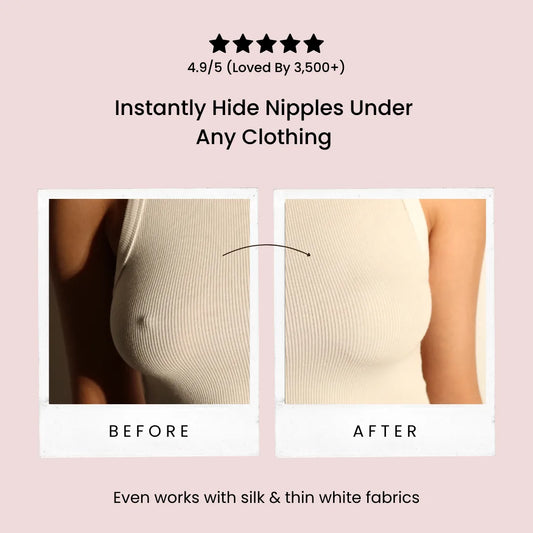
- Edges: very thin or tightly stretched fabrics can reveal the outline of almost anything worn underneath.
- Shade: contrast between the skin, nipple cover and garment can become more noticeable through pale or semi-sheer fabrics.
- Surface and texture: lighting can emphasise texture or shine that is less obvious to the naked eye.
- Garment tension: a fitted garment may smooth a cover down, while a loose garment provides much less support.
- Camera angle: something that looks seamless from the front may be more visible from the side or at a three-quarter angle.
That is why a quick test shot is one of the most useful steps before the model moves onto the full set.

Adhesive or non-adhesive nipple covers for a photoshoot?
Both can be useful in a model or stylist kit, but they solve different wardrobe problems.
Adhesive nipple covers
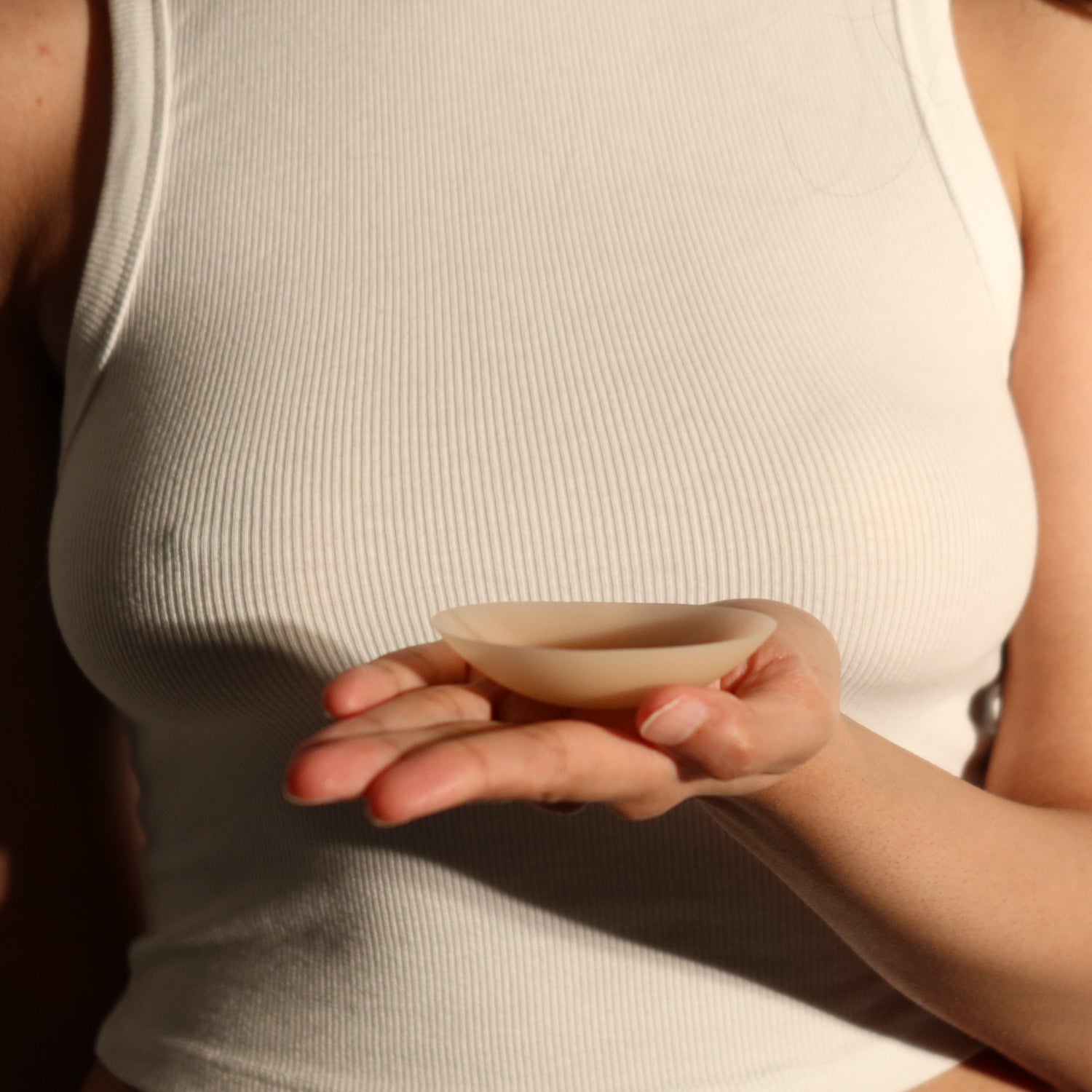
Adhesive nipple covers are usually the most flexible option when the garment itself cannot hold a cover in place. They make sense for backless dresses, strapless looks, plunging necklines and looser garments where there is little fabric pressure against the body.
For shoots involving many different outfits, having more than one size available can also help because the best option depends on the model, garment and amount of coverage required. nip stories Sticky Nippys are available in 8 cm, 10 cm and 13 cm sizes, with light, nude and dark shade options across the range.

Non-adhesive nipple covers
Non-adhesive nipple covers are useful when the model is wearing a snug top, fitted dress, unlined bra, bralette or sports bra that can keep the covers pressed securely against the body. Because there is no adhesive, they can also be a useful alternative for models who prefer an adhesive-free option.
The important limitation is fit. A non-adhesive cover should not be treated as a free-standing solution under a loose or open garment. It relies on the clothing to help hold it in place.

Choosing nipple covers for different types of shoots
E-commerce and catalogue shoots
Consistency is often the biggest priority on an e-commerce set. A model may change through dozens of tops, dresses or bras in one session, so wardrobe teams benefit from having a small range of sizes, shades and both adhesive and non-adhesive options available.
Where possible, decide on the coverage solution before the shooting sequence begins. That helps avoid discovering halfway through a product run that a cover edge or colour is appearing differently from one garment to the next.
Editorial and fashion shoots
Editorial looks tend to involve more unusual cuts, sheer fabrics and unconventional styling. The goal may not always be complete invisibility. Instead, the nipple cover needs to work with the creative direction and the garment.
For narrow necklines or outfits where a round cover does not suit the shape of the garment, a different shape such as triangle adhesive nipple covers can be worth testing.
Campaigns, commercial shoots and video
For moving talent, video and commercial production, test the look while the model is moving rather than only while standing still. Walking, sitting, raising the arms and changing posture can alter how the fabric sits over the cover.
If the outfit needs lift or shaping as well as nipple coverage, nipple covers can also be paired with boob tape where appropriate for the styling brief.
What about thin, white, sheer or fitted fabrics?
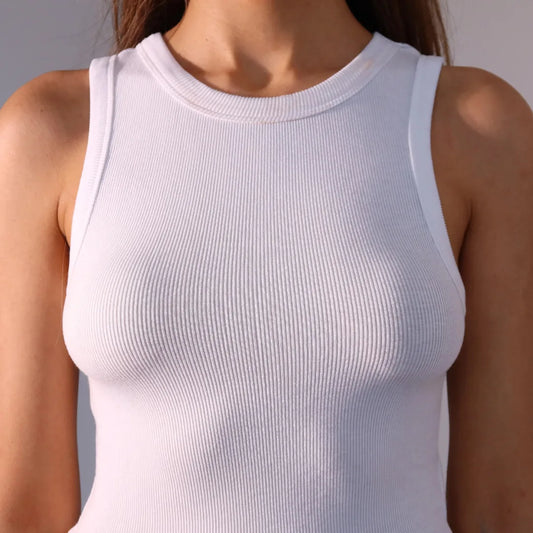
These are the outfits where testing matters most. Thin fabric can reveal edges, fitted fabric can exaggerate anything underneath it, and pale fabric can show contrast between the skin and whatever is being worn underneath.
With white or pale garments, choosing a white cover is not necessarily the answer. A shade closer to the model's skin tone will often be the more logical starting point, but the garment and lighting should still be tested.
Likewise, smaller is not automatically more discreet. A larger cover provides more coverage and may create a different transition under the garment. The right choice depends on the model and fabric, which is why keeping more than one size available is useful for professional styling.


A simple camera test before the shoot starts
You do not need a complicated test setup. Before committing to the look:
- Dress the model in the actual garment and nipple covers.
- Check the outfit from the front, side and a three-quarter angle.
- Take a close test image using the camera or lighting setup planned for the shoot.
- If flash or harder light will be used, test with it rather than relying only on room lighting.
- Zoom into the image and check edges, shade contrast and surface texture.
- Ask the model to move, sit or raise their arms if the final shoot involves movement.
A two-minute test can be much easier than trying to correct a recurring wardrobe issue across an entire image set later.
What should a model or stylist keep on set?
For regular fashion work, a compact nipple-cover kit can be more useful than relying on a single pair for every scenario. A practical set could include adhesive covers, non-adhesive covers, more than one size, a few suitable shades, and an option such as boob tape for outfits that also need lift or shaping.
For active looks and fitted garments, non-adhesive covers can be particularly useful when the garment provides enough pressure to hold them in place.

Hygiene matters when working with multiple models
Reusable nipple covers are personal-wear items. On professional sets, each model should have their own pair rather than sharing reusable covers between people. Keep pairs separated, store them cleanly and follow the care instructions for the specific product.
This is particularly important for e-commerce, catalogue and production teams working with several models in the same day. Labelling or allocating individual pairs at the start of the shoot keeps the process simple.
Quick recommendations for common photoshoot situations
- Backless or strapless look: start with adhesive nipple covers.
- Loose top or dress: adhesive covers are generally the safer choice because non-adhesive covers need garment pressure.
- Snug halter, crop top or sports bra: non-adhesive covers may work well.
- Thin or fitted fabric: test edge visibility under the actual lighting before shooting.
- White or pale fabric: test the shade under the garment rather than choosing based on the garment colour alone.
- Unusual neckline or narrow cut: consider a different cover shape such as triangle nipple covers.
- Coverage plus lift: combine the appropriate nipple cover with boob tape if the outfit requires shaping.
Frequently asked questions
Can nipple covers show up on camera?
Yes. Visibility depends on the cover, garment, lighting, camera angle and how tightly the fabric sits against the body. That is why a test image is more reliable than judging the outfit only in a mirror.
What colour nipple covers are best for photoshoots?
A shade close to the model's skin tone is a good starting point, particularly under light-coloured clothing. However, the final choice should be checked beneath the actual garment because fabric colour and transparency can change the result.
What size nipple covers should models use?
There is no universal size for every model or outfit. The required coverage, breast size, garment and fabric all matter. Having more than one size available on set gives the stylist more flexibility.
Can models wear non-adhesive nipple covers for a photoshoot?
Yes, provided the garment is snug enough to hold them securely in place. For loose, backless or open garments, adhesive covers are generally more suitable.
Should models bring their own nipple covers to shoots?
It can be useful, particularly if a model already knows which size and style works well for them. Some stylists and wardrobe teams also supply coverage products. Either way, reusable nipple covers should be treated as individual personal-wear items rather than shared between models.
The takeaway
For models and photoshoots, the goal is not to find one nipple cover that works under everything. It is to have the right option for the garment and confirm the result under the actual camera and lighting conditions.
For a versatile shoot kit, explore Sticky Nippys adhesive nipple covers and Grippy Nippys non-adhesive nipple covers. If you are building a wider professional wardrobe kit, our guide to nipple covers for stylists covers the broader styling side too.