

What is the purpose of a nipple cover? Do they really work?
The short answer
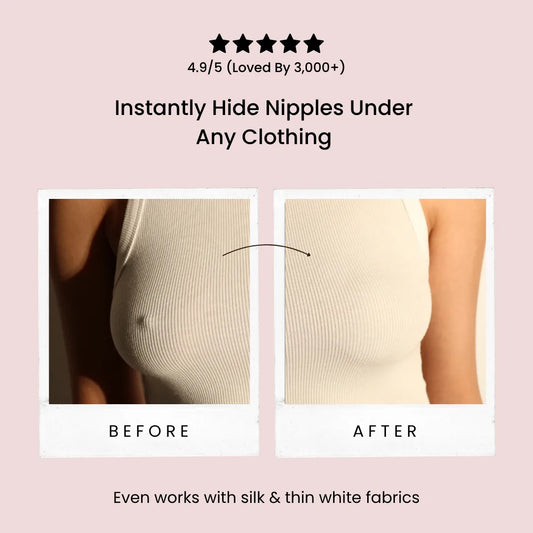
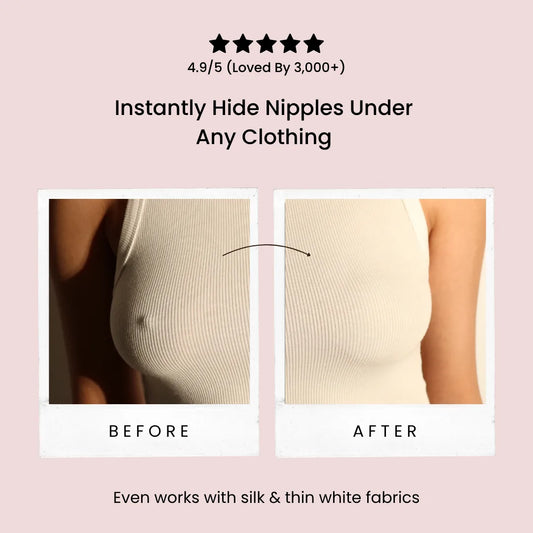
The purpose of a nipple cover is to give you coverage and a smooth, discreet finish under clothing, without the straps, bands, or outlines of a bra. A nipple cover is a small reusable silicone cover worn directly over the nipple, so you can wear thin, fitted, sheer, backless, or strapless outfits with less show-through and less adjusting.
Yes, nipple covers do work, when they are matched to the outfit. Most disappointment in this category comes down to a mismatch rather than a faulty product: the wrong type for the outfit, the wrong size, or covers worn past their best. Choose the right style for what you are wearing and they do their job quietly.
Below is the full picture: what nipple covers are actually for, when they work best, what they will not do, and how to choose the right pair for your outfit.
What is the purpose of a nipple cover?

A nipple cover is a reusable silicone cover worn directly over the nipple. Its purpose is simple. It provides coverage and a smoother finish under clothing, so an outfit looks clean without a visible bra.
That breaks down into a few specific jobs:
- Reducing nipple show-through under thin, fitted, sheer, or light-coloured fabrics.
- Letting you go braless in outfits where straps or bands would show, such as backless, strapless, or open-side styles.
- Giving a smoother finish in outfits where a bra would add lines, bulk, or mismatch.
- Making getting dressed simpler when you want coverage but not the full structure of a bra.
In short, a nipple cover solves a coverage problem, not a support problem. If you want a closer look at the mechanics, we cover this in more detail in how nipple covers work.
What a nipple cover is not for
This is where expectations matter most. A nipple cover is a coverage product. It does not lift, push up, or reshape the bust.
If your real goal is lift or support, that is a different category. Boob tape and bra inserts are designed for shape and lift. A flat silicone cover is not.
Knowing this upfront is the single biggest thing that stops people feeling let down by nipple covers.
Do nipple covers actually work?
Yes. Nipple covers work when the type is matched to the outfit. The product is rarely the real problem. The match usually is.
When people say nipple covers "don't work," it almost always traces back to one of a few fixable reasons.
Why some people feel nipple covers don't work
- The wrong type for the outfit. Non-adhesive covers in a loose, unsupported dress have nothing holding them in place. They were never designed for that outfit.
- The wrong size. A cover that is too small may not give enough coverage. One that is too large can show its edge under thin fabric.
- Edges not pressed flat. A lifted edge is what creates a visible ring. Smooth, flat edges sit far more discreetly.
- Applied over moisturiser, oil, or sunscreen. Adhesive needs clean, dry skin to hold. Body products weaken the stick.
- Worn past their best. Adhesive gradually loses tack, and silicone collects lint. Both reduce how well a cover holds and how smooth it looks.
- Expecting lift. If the outfit actually needed support, a coverage product was always going to feel like it fell short.
Fix the match and most "they don't work" complaints disappear. That is the shift worth making: the category may not be the problem, the pairing may be.
When do nipple covers work best?
Nipple covers work best when you start with the outfit and choose the hold type to match. Here is the quick logic.
| Type | How it stays on | Works best for | Coverage or lift |
|---|---|---|---|
| Adhesive | Sticks directly to skin | Backless, strapless, loose, open, or thin-fabric outfits, and everyday versatility | Coverage |
| Non-adhesive | Body heat and garment pressure | Snug tops, fitted dresses, and wear under an unlined bra | Coverage |
| Triangle | Adhesive or non-adhesive, shaped for necklines | Deep V, plunge, halter, and sweetheart necklines | Coverage |
| Breathable | Adhesive, with more airflow | Warm weather and longer wear when you still want adhesive hold | Coverage |
Match the cover to the outfit
If you remember nothing else, remember this set of fast rules:
- Loose, backless, strapless, or unsupported, choose adhesive nipple covers.
- Snug or fitted, or worn under an unlined bra, choose non-adhesive nipple covers.
- Deep or plunging neckline, choose triangle covers.
- Hot day, but you still want adhesive hold, choose breathable covers.
- You need lift, not just coverage, look at boob tape or bra inserts instead.
The outfit tells you more about which cover to choose than any other single factor.
The main types of nipple covers, explained
"Nipple covers" is not one product. The range exists because different outfits ask for different things. Here is what each type is for, and the trade-off that comes with it.
Adhesive nipple covers
Adhesive covers are reusable silicone covers with a sticky layer that bonds to clean, dry skin. Because they hold themselves in place, they do not rely on the outfit for support, which makes them the most versatile option across outfit types.
They are usually the easiest first pair to buy, and the safer choice for backless, strapless, loose, or thin-fabric outfits. The trade-off is adhesive contact on the skin, which not everyone prefers.
Non-adhesive nipple covers
Non-adhesive covers are silicone with no sticky layer. They grip lightly using body heat, and the garment does part of the holding work. That makes them comfort-led, but more dependent on the outfit.
They suit snug tops, fitted dresses, and wear under an unlined bra. They are not the best pick for loose or unsupported outfits, where there is nothing to hold them against the body.
Triangle covers
Triangle covers are shaped to sit below deep, plunging, halter, or sweetheart necklines, where the top edge of a round cover might otherwise peek out. They come in adhesive and non-adhesive options, so you still choose your hold type on top of the shape.
Breathable covers
Breathable covers are part of the adhesive family, designed with more airflow in mind. They are worth considering for warm weather or longer wear, when you still want adhesive security but a cooler feel.
Where boob tape and bra inserts fit in
These are not nipple covers, but they often come up in the same search. Boob tape and bra inserts are lift and support products. If coverage is the goal, choose a cover. If lift is the goal, choose tape or inserts. For some outfits, people use both together.
Coverage vs lift: what nipple covers will not do
It is worth being clear, because this is the most common reason people feel a cover has underperformed.
Nipple covers are for coverage and a smooth finish. They will not give you lift, push-up, or a reshaped silhouette. A flat cover sits over the skin. It has nothing to pull against, so it cannot create structure.
If the outfit needs the bust held or lifted, that is the job of boob tape or bra inserts. Many people use a coverage product and a support product together for tricky outfits, which is a perfectly sensible approach.
So the honest answer to "can nipple covers replace a bra" is: for outfits where coverage is all you need, yes. For outfits that need real support, you may want to pair them with tape or inserts. We go deeper on this in what are nipple covers and can they replace your bra.
How to get the most out of your nipple covers
A lot of "do they work" really means "how do I make them work." Application and care do most of the heavy lifting.
- Start with clean, dry skin. For adhesive covers, apply before any moisturiser, oil, or sunscreen. A clean surface is what lets the adhesive hold.
- Centre the cover over the nipple. Hold it by the edges and position it before pressing down.
- Press from the centre outward. This pushes out air pockets and helps the edges sit flat against the skin.
- Smooth the edges down. Run a finger around the outside edge so nothing lifts. Flat edges are what keep a cover discreet under thin fabric.
- Check in a mirror before you dress. A quick look gives you the chance to adjust placement.
For non-adhesive covers, the steps are similar, but the outfit does part of the work. Position the cover, hold it briefly so body heat starts to grip, then put a snug garment over the top to help hold it in place.
A quick word on size and shade
nip stories nipple covers come in multiple sizes and shades. The right size gives full coverage without the edge showing, and a shade close to your skin tone sits more discreetly under light or sheer fabrics. If you are unsure, the size chart takes the guesswork out of it.
Caring for them so they keep working
- Wash after each wear with mild soap and water.
- Air dry fully before storing, rather than rubbing with a towel, which can leave lint on the surface.
- Store flat with the contact surface protected.
nip stories nipple covers are reusable with proper care. Looking after the adhesive or silicone surface is what keeps the hold and the finish reliable over time.
How to choose the right nipple covers for your outfit
Use this as a simple "choose this if" guide.
- Choose adhesive nipple covers if your outfit is backless, strapless, loose, or made from thin fabric, or if you simply want one versatile pair that works across most outfits. They are usually the easiest first pair to buy.
- Choose non-adhesive nipple covers if you prefer no adhesive on the skin and you are wearing something snug enough to help hold them in place, like a fitted top or dress, or an unlined bra.
- Choose triangle covers if your neckline is deep, plunging, halter, or sweetheart, where the edge of a round cover might otherwise peek out.
- Choose breathable covers if it is a warm day or a long wear, and you still want the security of adhesive hold with more airflow.
- Reach for boob tape or bra inserts if what you actually need is lift or shape rather than coverage.
Quick outfit cheat sheet
| Outfit | Best starting point | Why |
|---|---|---|
| Backless dress | Adhesive covers | No garment support to hold a cover in place |
| Strapless top or dress | Adhesive covers | Nothing pressing the cover against the body |
| Snug t-shirt or fitted top | Non-adhesive covers | The garment holds the cover, with no adhesive needed |
| Thin or white top | Adhesive covers | Tend to sit flattest at the edges under unforgiving fabric |
| Deep V or plunge neckline | Triangle covers | Shaped to stay below the neckline edge |
| Halter neck | Triangle covers | Sits cleanly under high or angled necklines |
| Under an unlined bra | Non-adhesive covers | The bra cup holds the cover |
| Warm weather or a long day | Breathable covers | Adhesive hold with more airflow |
| Outfit that needs lift | Boob tape or bra inserts | Coverage alone will not lift the bust |
Still weighing up the two most common options? Our guide to adhesive vs non-adhesive nipple covers walks through it outfit by outfit.
Frequently asked questions
What is the purpose of a nipple cover?
A nipple cover provides coverage and a smooth, discreet finish under clothing. It lets you go braless or skip visible straps and bands, which is useful under thin, fitted, sheer, backless, or strapless outfits. It is a coverage product, so it does not lift or reshape the bust.
Do nipple covers actually work?
Yes, when they are matched to the outfit. Most cases of nipple covers "not working" come from a mismatch, such as using non-adhesive covers in an unsupported outfit, choosing the wrong size, not pressing the edges flat, or expecting lift from a coverage product. Match the type to what you are wearing and they do their job quietly.
Do nipple covers stay on all day?
It depends on the hold type, the outfit, and how they are applied. Applied to clean, dry skin with the edges pressed flat, adhesive covers are designed to stay put through everyday wear. For long, hot, or high-movement days, breathable covers are a sensible choice. Non-adhesive covers stay best when a snug garment is helping to hold them.
Can nipple covers replace a bra?
For outfits where coverage is all you need, they can be a standalone option. They do not provide lift or structural support, so for outfits that need the bust held or shaped, boob tape or bra inserts may be more relevant, sometimes alongside a cover.
Are nipple covers reusable?
nip stories silicone nipple covers are reusable with proper care. Wash them after each wear with mild soap and water, air dry fully, and store them flat with the contact surface protected. Keeping the surface clean and lint-free is what preserves the hold over time.
Will nipple covers show under a thin or white top?
When applied with flat edges, in the right size, and in a shade close to your skin tone, nipple covers sit discreetly under most fabrics. Thin, sheer, or very light fabrics are less forgiving, so a flat edge finish and correct size matter more. Adhesive covers tend to sit flattest at the edges under unforgiving fabrics.
How long do nipple covers last?
Reusable silicone covers are designed to be worn many times with proper care. Lifespan depends on how often you wear them and how well you clean and store them. Adhesive covers gradually lose tack over time, while non-adhesive covers rely on the silicone surface staying clean and free of lint. Washing after each wear and storing them flat keeps them working for longer.
Do nipple covers hurt to take off?
They should not, if you remove them gently. Peel from one edge slowly rather than pulling the whole cover off at once. If the adhesive feels very stuck, a little warm water or gentle oil at the edge can help loosen it. If you have sensitive skin, a patch test on a small area before a full day of wear is a sensible step.
The bottom line

The purpose of a nipple cover is coverage and a smoother finish under clothing, without a visible bra. And yes, they work, as long as you match the type to the outfit.
Start with what you are wearing:
- Loose, open, backless, or strapless, go with adhesive.
- Snug, fitted, or under an unlined bra, non-adhesive can work well.
- Deep neckline, consider triangle covers.
- Hot day with adhesive hold, consider breathable covers.
- Need lift rather than coverage, look at boob tape or bra inserts.
The best nipple cover is the one matched to the outfit you are actually wearing.