

Why bras become harder to wear during menopause
Share
Why bras become harder to wear during menopause
For a lot of women, bras start to feel more uncomfortable around perimenopause and menopause. A few things tend to make it worse.
Breast tenderness and sensitivity. Hormonal changes during this stage can make breast tissue more tender than it was before. Underwire and firm bra bands can shift from tolerable to genuinely irritating.
Hot flushes and extra warmth. A bra adds a layer of warmth across the chest and back. During a hot flush, that extra heat makes the discomfort worse.
Shoulder and upper body mobility. Conditions like frozen shoulder become more common during menopause. Reaching behind to fasten a bra clasp can become painful or on difficult days, simply impossible.
Body changes and fit. Shape can shift during menopause, which means bras that used to fit well may no longer feel comfortable or correctly sized.
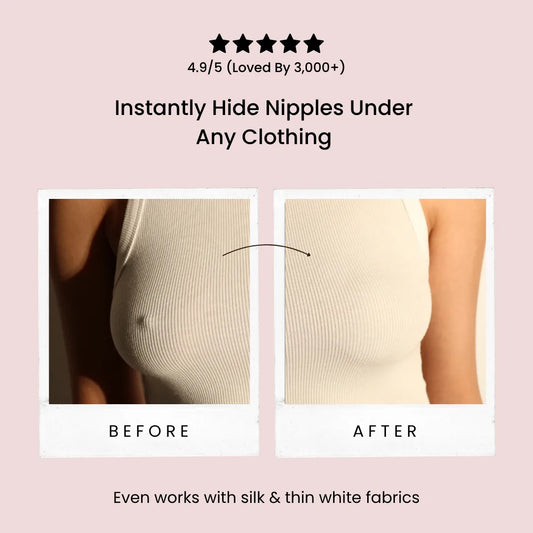
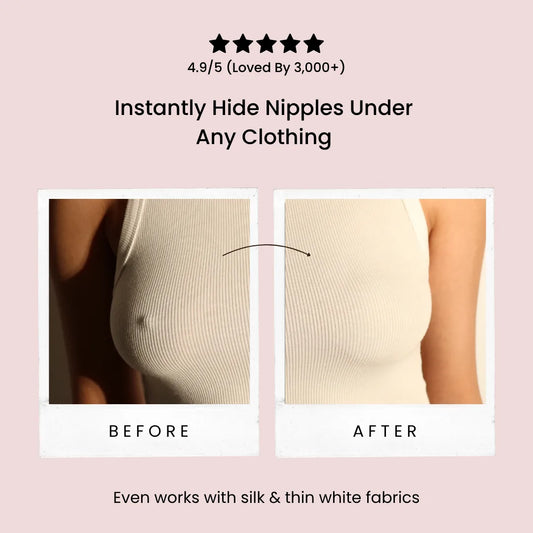
Nipple covers do not replace everything a bra does. They do not provide lift or structural support. But for everyday outfits where coverage is the main need, they remove the parts of bra-wearing that tend to cause the most discomfort.
What nipple covers can and cannot do
It is worth being clear upfront.
Nipple covers can:
- provide a smooth, discreet finish under clothing
- remove the need for underwire, bra bands, or straps
- work with snug tops, fitted dresses, and layered outfits
- make getting dressed easier when shoulder mobility is limited
- feel cooler and lighter than a full bra, especially in warm weather
Nipple covers cannot:
- provide lift or reshaping (that is the job of boob tape or bra inserts)
- replace a bra in outfits that genuinely need structural support
- work in every outfit type, in some cases they rely on the garment to help hold them in place
The right use case is everyday coverage in regular outfits, not a full replacement for all bra functions in all situations.
What customers say
"Life changing!! So good! I'm post menopause and these are the best! If you know you know!"
"Thank you so much for your amazing products. I cannot recommend them more!! I've got a frozen shoulder (very common in menopause) and finding it really difficult to wear a bra. These nipple covers are absolutely fantastic and because I don't have to wear a bra now, my pain has decreased, I'm so much more comfortable. Nipple covers for any woman suffering from shoulder problems are a brilliant alternative to wearing bras!! Thanks so much. Brenda"
The second review captures one of the most common but least-talked-about reasons women reduce or stop wearing bras during menopause: shoulder and upper body pain that makes the physical act of getting dressed genuinely difficult. For Brenda, removing the bra from her morning routine made a real difference to her comfort.
Which nipple cover works best
Not all nipple covers work the same way. The best choice depends on what you are wearing.
Adhesive nipple covers
Adhesive covers stick directly to the skin and hold themselves in place without help from the garment. This makes them the most versatile option for daily wear.
Better choice when your outfit is:
- loose, flowy, or unsupported
- strapless or backless
- made from thin or lightweight fabric where every outline matters
Non-adhesive nipple covers
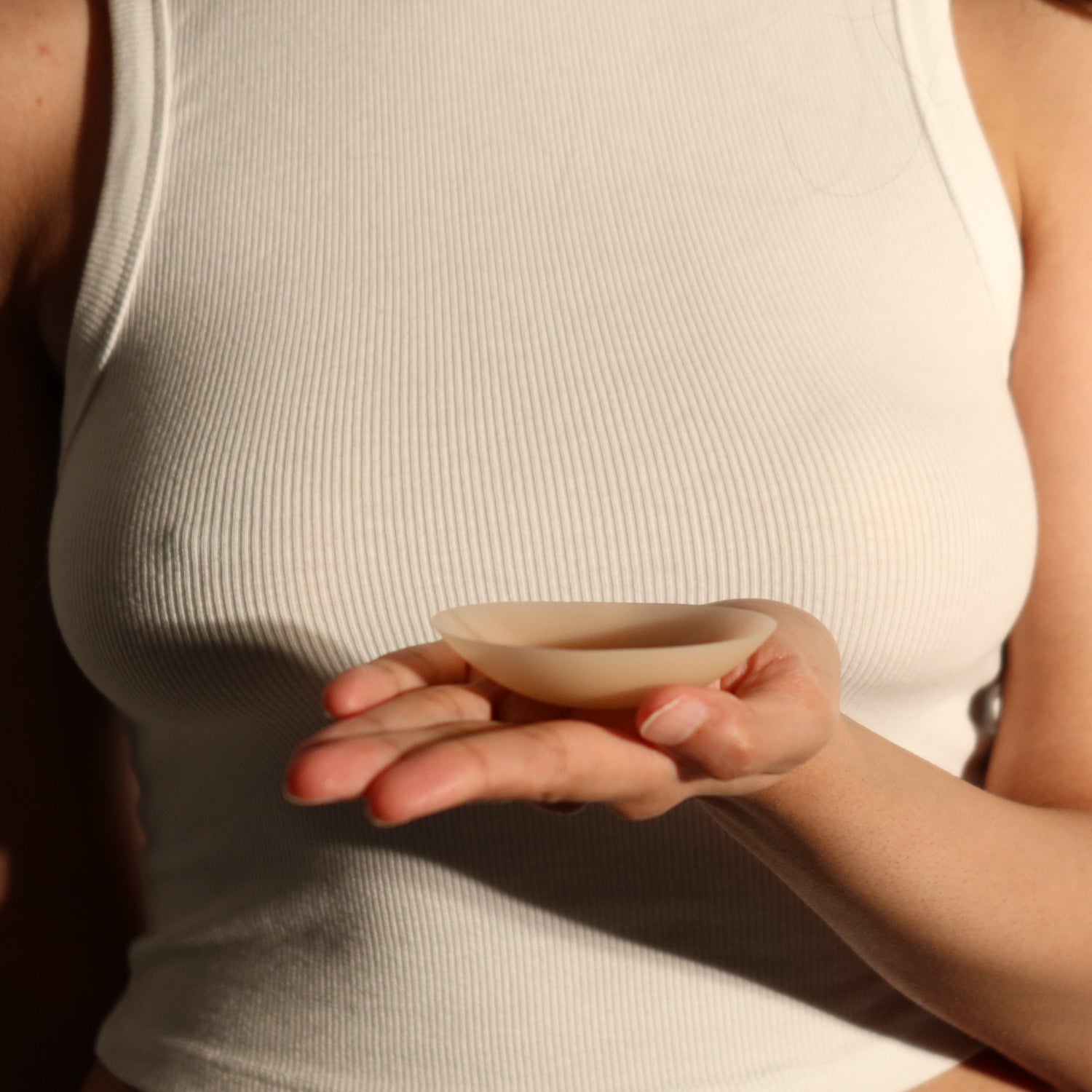
Non-adhesive covers have no sticky layer. They rely on body heat and the pressure of the garment to hold them in place. Because there is no adhesive, they tend to feel lighter and gentler on the skin.
Better choice when:
- the outfit is snug or fitted
- the garment will press the cover against the body
- you want a simpler, no-stick feel for everyday wear
For some women, the no-adhesive feel is the main reason to choose them, especially when skin sensitivity is a consideration.
Breathable covers
Breathable covers are part of the adhesive family, but designed with more airflow in mind. If hot flushes are a factor and you still want the hold security of adhesive, breathable covers are worth considering.
Particularly useful:
- on warmer days
- when wearing covers for longer periods
- when extra warmth across the chest makes standard adhesive covers feel uncomfortable
Choosing by outfit
| Outfit type | Best starting point | Why |
|---|---|---|
| Snug top or fitted t-shirt | Non-adhesive | The garment holds the cover. Lighter feel on skin. |
| Loose or flowy top | Adhesive | Needs to hold without garment support |
| Fitted dress | Adhesive or non-adhesive | Depends on how snug the fabric is |
| Warm weather outfit | Breathable covers | Adhesive hold with better airflow |
| Deep V or plunge neckline | Triangle covers | Sits below the neckline edge more cleanly than round covers |
Practical notes for first-time buyers
Start with adhesive. Adhesive covers work across more outfit types, which makes them a lower-risk first purchase. Non-adhesive are a great option once you know which outfits you will be wearing them with.
Check the size. Nipple covers come in multiple sizes. A cover that is too small may not provide enough coverage. A cover that is too large may show under thin fabrics. Check the sizing guidance before buying to reduce the guesswork.
Clean, dry skin first. Adhesive holds best when skin has no moisturiser, sunscreen, or body oil on it. Applying covers before any body products gives you the best hold.
They are reusable. Wash after each wear with mild soap and water, air dry fully, and store flat with the contact surface protected. Proper care extends the life of the product significantly.
Frequently asked questions
Are nipple covers good for sensitive skin during menopause?
Non-adhesive covers are worth considering if adhesive contact feels uncomfortable, since there is no sticky layer involved. If you are trying adhesive covers and have sensitive skin, a patch test on a small area before wearing them for a full day is a sensible step.
Can nipple covers replace a bra entirely?
For outfits where coverage is the main need and structural support is not required, nipple covers can work as a standalone option. They do not provide lift or reshaping. If your outfit needs structural support, boob tape or bra inserts may be more relevant.
What if I have limited shoulder mobility?
The physical difficulty of reaching behind to fasten a bra is one of the reasons some women with shoulder conditions find nipple covers practical. They go on and come off without clasps, bands, or straps, which can make getting dressed and undressed much easier.
Which nipple cover is best for hot flushes?
Breathable covers are designed with more airflow than standard adhesive covers. If warmth or hot flushes are a factor, breathable covers are the better starting point.
Will nipple covers show under clothing?
When applied to clean, dry skin with the edges pressed flat, adhesive nipple covers should sit discreetly under most clothing. Thin or sheer fabrics are less forgiving, choose a cover with a flat edge finish and make sure the size is right for full coverage. Non-adhesive covers in a snug outfit also sit smoothly when the garment is holding them in place.
I have not worn nipple covers before. Where do I start?
Start with adhesive covers. They work across more outfit types, which means less guesswork on your first purchase. From there, you can branch into non-adhesive for snug everyday outfits or breathable covers for warmer days.
The short version
For many women, the years around menopause are a good time to look again at what they actually need from their wardrobe. For everyday outfits where coverage matters but structural support does not, nipple covers are a practical, lower-fuss alternative to a bra.
Start with adhesive for versatility. Move to non-adhesive for snug outfits and a lighter feel. Consider breathable covers if warmth is a factor.
Shop nipple covers | Compare adhesive vs non-adhesive