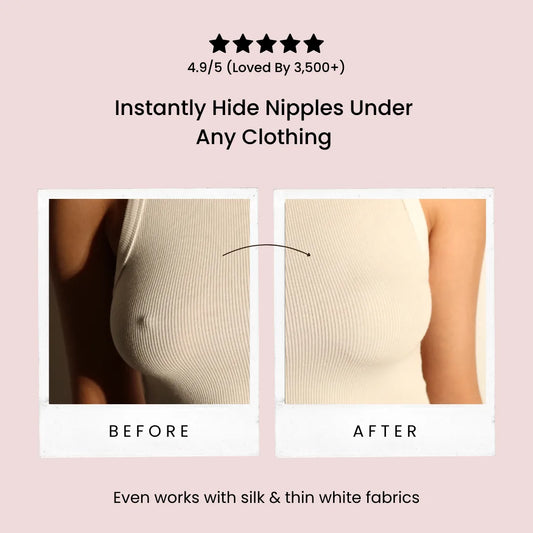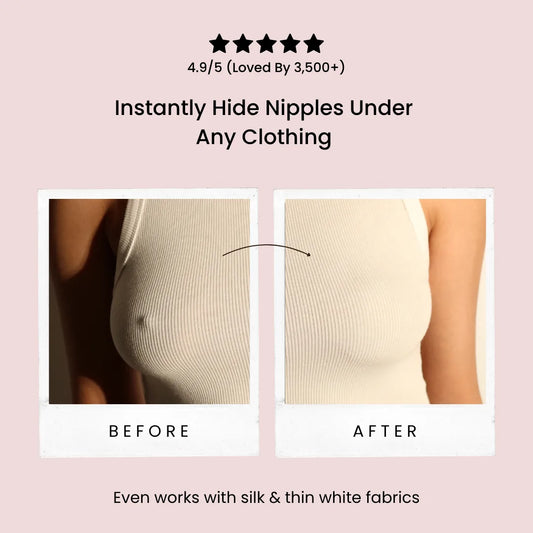

Nipple covers size guide (NZ): Choose the right size
Share
Choosing the right size in nipple covers should feel simple. But if you have ever bought a pair online and then wondered why the edges show under a fitted top (or why the cover does not feel secure), sizing is usually the reason.
This guide is designed for New Zealand shoppers and uses a straightforward cup-size method to help you choose the right size quickly. It is written in British English, and it focuses on what matters in real life: comfort, invisibility under clothing, and feeling confident in the outfits you actually wear.
Frequently asked questions
| Question | Answer |
|---|---|
| What size nipple covers should I get? | Use this guide: A-C cup = 8 cm, D-DD cup = 10 cm, and DDD+ = 13 cm. |
| Why does size matter so much? | Size affects coverage, edge visibility, hold, and how seamless nipple covers look under clothing. |
| Can I use bra band size too? | Band size matters less than cup size for coverage. Cup size is a faster sizing shortcut. |
| What if I am between cup sizes? | Choose based on outfits: fitted tops usually suit more coverage, while minimal tops suit smaller coverage. |
| Are bigger nipple covers more visible? | Not always. Larger sizes often have edges that taper better and look smoother under thin fabric. |
| Do I need a different size for different outfits? | Not always, but if you wear both fitted ribbed tops and very minimal tops, having two sizes can help. |
| What size is best for thin or light-coloured tops? | Most people prefer the size that gives more smoothing: usually 10 cm or 13 cm depending on cup size. |
| What if I want the most “everyday” option? | Choose your cup-based size and prioritise a thin tapered edge for a seamless finish. |
Quick size chart (cup size to nipple covers size)
If you want the fastest answer, start here.
A-C cup: Choose 8 cm nipple covers
This size tends to suit smaller to medium cup sizes, especially if you want coverage that stays discreet under everyday tops.
D-DD cup: Choose 10 cm nipple covers
This size is often the most versatile for smoothing under fitted tops and giving more “edge-blending” coverage.
DDD and above: Choose 13 cm nipple covers
This size is best for fuller busts where a larger coverage area creates a smoother finish and improves security.
Why nipple covers size matters (more than you think)
When nipple covers do not look seamless, it is usually not because nipple covers “do not work”. It is because the coverage area is not right for your body and your wardrobe.
The right size helps with four things:
-
Coverage: You want enough coverage so the areola is fully covered and the edges sit on flatter skin.
-
Invisibility: The edge is what shows most under clothing. A better-fitting size reduces the chance of a visible outline.
-
Hold: More surface contact usually means better stability, especially through long wear.
-
Comfort: A size that suits your chest shape is less likely to wrinkle, lift, or feel like it is sitting in the wrong place.
Cup size is not a perfect scientific measurement, but it is a practical shortcut that works well for most people shopping in New Zealand, especially when you want a quick choice without overthinking measurements.
A-C cup: Why 8 cm nipple covers usually work best
If you are an A, B, or C cup, 8 cm nipple covers often provide the right balance between coverage and discretion.
Best for:
-
Everyday tops and T-shirts
-
Wearing nipple covers under bras (especially lightly lined bras)
-
Outfits where you want a smaller coverage area
-
Petite frames or narrower chests
Why 8 cm works well:
For A-C cups, the coverage area is usually enough to sit smoothly without spreading too wide across the chest. That matters if you wear tops with smaller necklines, tighter armholes, or fitted cuts where a larger circle could sit awkwardly.
When you might prefer sizing up:
Even in the A-C range, you may prefer more smoothing if you often wear:
-
Thin ribbed tops
-
Tight white tops
-
Light-coloured fabrics
-
Very clingy dresses
In those cases, you can still start with 8 cm, but prioritise nipple covers that have a thin tapered edge designed to disappear under clothing.
D-DD cup: Why 10 cm nipple covers are the everyday sweet spot
If you are a D to DD cup, 10 cm nipple covers are often the easiest “all-rounder” option. They offer more coverage and more smoothing, without being overly large.
Best for:
-
Fitted tops and dresses
-
Thin fabrics and light colours
-
Outfits where you want a smooth finish, not just coverage
-
Long wear (work days, nights out, events)
Why 10 cm works well:
On fuller busts, the curve of the chest can make smaller nipple covers sit too close to the areola, which increases the chance of the edge showing. A 10 cm size gives the edge more room to fade out and blend into skin, which often looks more seamless under clothing.
This is also a useful size if you live in places like Auckland where humidity and warmth can mean more movement or sweat through the day. Better fit and more coverage can help nipple covers feel more secure for longer wear.
DDD+ cup: Why 13 cm nipple covers create the smoothest finish
If you are a DDD cup or above, 13 cm nipple covers tend to perform better for two reasons: smoothing and security.
Best for:
-
Maximum smoothing under thin or fitted tops
-
Larger bust shapes where smaller sizes can lift at the edges
-
Long wear at events (weddings, festivals, parties)
-
Braless outfits where you want a confident, secure feel
Why 13 cm works well:
With a fuller bust, there is often more curve and movement. A larger coverage area means more contact with skin and less reliance on a small surface area staying perfectly flat.
Also, under fitted clothing, larger nipple covers can actually look more invisible because the edge has more space to taper smoothly.
If you have ever worn nipple covers and felt like the edges were the giveaway, this size category is often the fix.
What to do if you are between sizes
Cup sizes are not always clean and simple. Many people sit “between” categories (for example, C/D or DD/DDD). When that happens, choose based on your wardrobe.
Choose the smaller size if:
-
You wear minimal tops often
-
You prefer less coverage area
-
Your necklines are small or high
-
You want the most discreet feel
Choose the larger size if:
-
You wear fitted or ribbed tops often
-
You prefer more smoothing and edge blending
-
You want better security for long wear
-
You often go braless
A simple way to decide is to think about your most-worn top in New Zealand. If it is a fitted ribbed tee or a clingy dress, more coverage usually wins. If it is a loose tee or layered winter outfits, the smaller size may be perfect.
Local NZ outfit scenarios (so you can choose with confidence)
Summer in Auckland: Thin tops, humidity, and movement
In warm, humid days, fitted tops are common and comfort matters. Cup-based sizing works well here, but err on the side of smoothing if you wear thin fabrics often.
Windy Wellington days: Layers shifting
If you are wearing layers that move around, stability matters. The right size helps nipple covers stay put, especially through longer wear.
South Island winters: Temperature changes
Cold air can make nipples more visible even with a bra. If this is your main issue, focus on the size that gives a smooth finish under jumpers, thermals, and fitted winter layers.
The biggest sizing mistake (and how to avoid it)
The most common mistake is choosing nipple covers that are too small because you assume it will look more discreet. Often, too-small nipple covers create a sharper edge and a more obvious outline under fitted fabric.
Your cup-based sizing guide solves that by giving you enough coverage to blend, not just cover.
Final thoughts: Choose the size once, then enjoy your wardrobe again
If you want nipple covers that feel effortless, start with your cup size and choose the matching diameter:
- A-C cup: 8 cm
- D-DD cup: 10 cm
- DDD+: 13 cm
From there, the goal is simple: nipple covers that disappear under your clothes and let you wear what you want, anywhere in New Zealand, without adjusting or overthinking.